
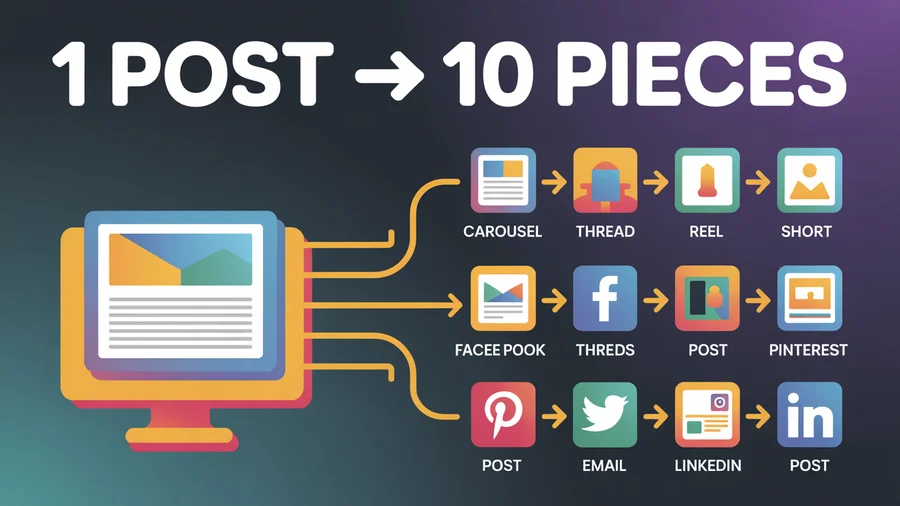
Email marketing and social media are often treated as competing priorities, competing for the same budget and the same hours. In reality, they are complementary channels that, when used together intelligently, deliver better results than either achieves alone. Understanding how to connect the two is one of the more underrated skills in digital marketing.
Growing Your Email List Through Social Media
Social media followers are a rented audience. A change in platform algorithm, a policy update or an account suspension can dramatically reduce your reach overnight. Email subscribers, by contrast, are an audience you own — you can reach them directly, without intermediaries, at a time of your choosing.
Using social media to grow your email list is therefore a sound strategic move. Offering something of genuine value — a useful guide, an exclusive discount, early access to products or events, a regular newsletter with content not published elsewhere — gives followers a reason to take the step from passive scroll to active subscription.
Turning Email Subscribers Into Social Followers
The relationship works in the other direction too. Email subscribers who also follow you on social media encounter your brand across multiple touchpoints, which tends to increase both engagement and loyalty. Including links to your social profiles in every email, promoting specific social content or campaigns to your list, and inviting subscribers to join online communities all help to build a more interconnected audience.
Some brands create content specifically designed to move email subscribers onto social platforms — exclusive conversations in private groups, behind-the-scenes social content teased in email newsletters, or live events accessible only to social followers. Mailchimp has published research showing that customers who engage with a brand across both email and social have significantly higher lifetime value than those who use only one channel.
Using Social Data To Improve Email Campaigns
Social media engagement data tells you what your audience responds to. Topics that generate strong engagement on social — high shares, saves, comments — are reliable signals about what your email subscribers will find valuable. Using these insights to guide your email content strategy means you are working with real audience preferences rather than guesses.
Similarly, the questions and conversations that arise in social comments can directly inform email content. A frequently asked question on Instagram is often the basis for an excellent email explaining the answer in depth.
Retargeting Email Audiences On Social Platforms
Most major social advertising platforms allow you to upload a customer email list and serve ads specifically to those people, or to audiences who closely resemble them. This gives you the ability to reach existing customers or subscribers with relevant paid content, whether for a new product, a seasonal promotion or a re-engagement campaign.
Connecting The Channels Strategically
Joining these channels together requires intentional planning and consistent execution. Effective social media management from a company like 99social works in tandem with your email strategy to ensure both channels reinforce rather than duplicate each other.
The brands that treat their digital channels as an interconnected system rather than isolated silos almost always outperform those that do not.